The Beers
Unfiltered · Unpasteurized · Uncompromising
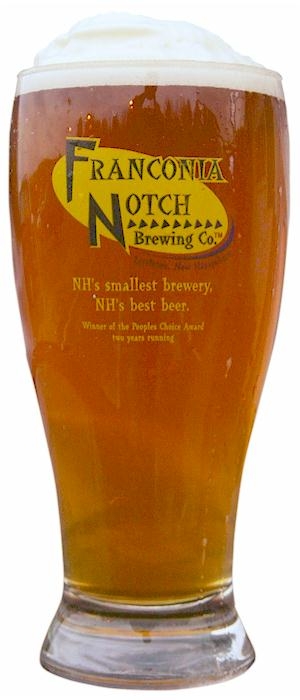
Franconia Notch Brewing Company produced three year-round beers and a rotating cast of seasonals throughout its ten years of operation. Every beer was unfiltered, unpasteurized, and brewed in small batches using traditional methods. The brewery did not own a filter. It never did.
Grail Pale Ale
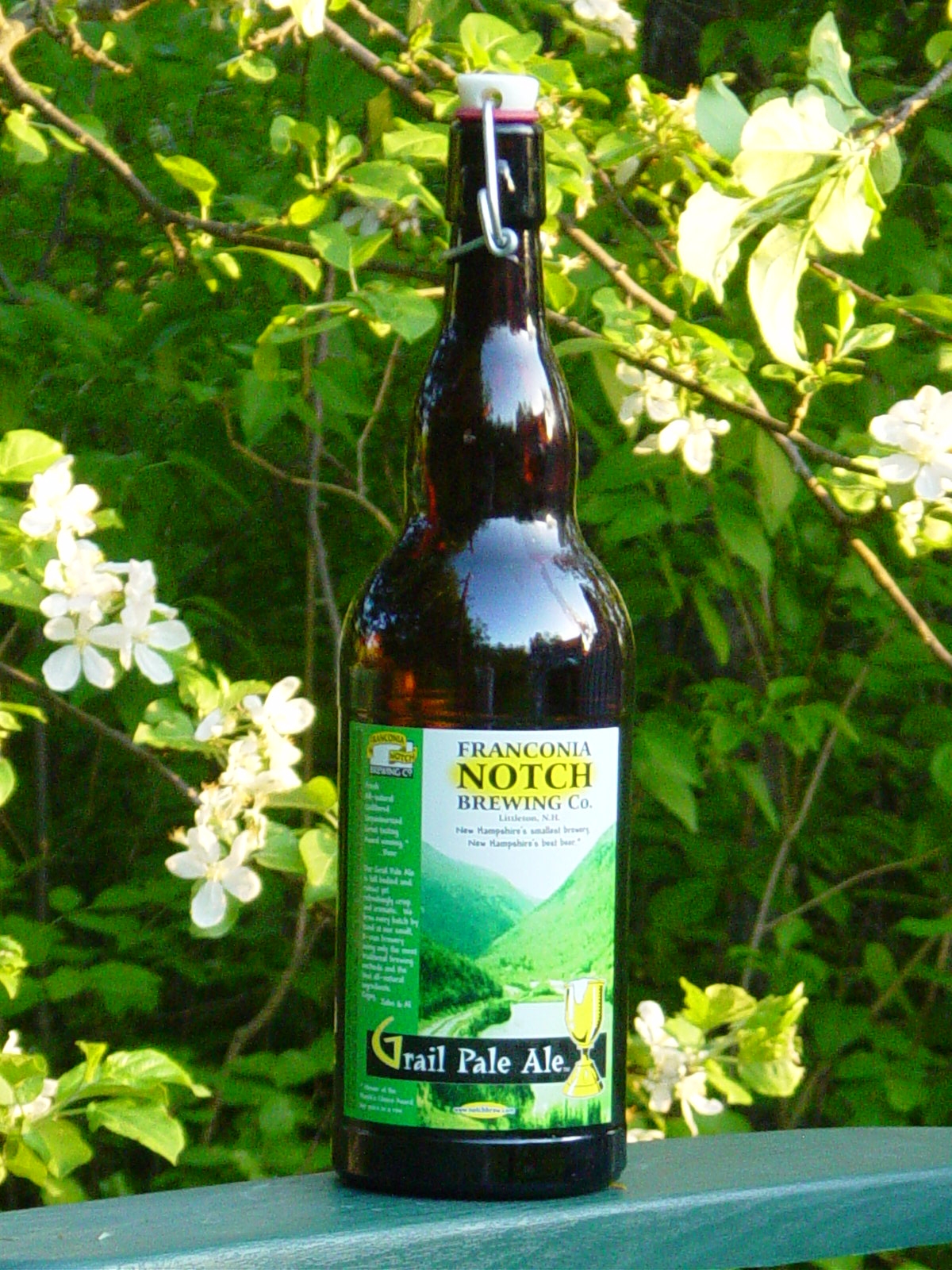
If Franconia Notch Brewing Company had a soul, it lived in Grail Pale Ale.
John has described Grail as his dream beer — and the description is precise. Not a beer designed by committee or focus group, not a calculation about what the market might want, but a beer built entirely around a single question: what is the most delicious beer I can possibly imagine?
"When honing the recipe, I didn't try to guess what I thought other people might want. I only tried to do one thing — make the best, most delicious beer I could imagine according to my own taste, as though I was the only one who was going to be drinking it."
The answer to that question turned out to be something that didn't quite fit any existing category. At a time when New England craft beers tended toward dry — some very dry, almost metallic — Grail went the other direction entirely. A hint of malt sweetness. Delicate notes of fresh fermentation. Modest bitterness. And what John called, in his own words at the time, an absolute symphony of hop flavor and aroma.
The symphony metaphor was not casual. John approached the hop additions in Grail the way a composer approaches an orchestration — each variety assigned a specific role, a specific character, a specific place in the whole.
"I saw the hops as specific instruments. East Kent Golding hop oil emulsion was the violins. East Kent Golding post-boil leaf hops were the violas. Centennial used at the end of the boil gave a very specific oboe note."
The yeast was equally deliberate — and equally ahead of its time. John had settled on his choice two years before the brewery opened, at a moment when the dominant fashion in craft brewing ran toward aggressive, fast-fermenting, high-attenuating strains that produced dry, assertive beers.
"The yeast I chose was the antithesis of what was popular. Mellow, patient, inefficient in the best possible way — always leaving behind a little malt sweetness and some lovely notes of tropical and melon-like esters. It's now considered one of two classic New England IPA yeasts. Back then it just tasted right to me."
The decision not to filter was equally intentional — and required more explaining in those early years than almost anything else about the brewery. Franconia Notch Brewing Company never owned a filter. Every beer that left the building was unfiltered, hazy with living yeast, exactly as John intended.
"I always liked Hefeweizen and preferred it with the yeast roused in. I knew that's what would happen with my kegs out in the real world anyway, so I said to heck with it — let the beer be hazy. It tastes better and fresher that way. It took a lot of explaining in the early days that there was nothing wrong with it."
He leaned into it. The brewery promoted the yeast as being rich in protein and B vitamins. Federal labeling regulations made it impossible to put anything like that on a label — but nobody said anything about t-shirts. For years, Franconia Notch Brewing Company t-shirts and bumper stickers carried a simple instruction:
The results spoke for themselves. Grail Pale Ale won the People's Choice Award for Best Beer in New Hampshire — not best beer made in New Hampshire, but best beer available in New Hampshire, European imports included — both years the award was ever given. When entered in the Great American Beer Festival against more than 800 pale ales, it was, by the standards of the time, a genuine outlier for the category. CAMRA — the Campaign for Real Ale, the most important beer advocacy organization in the world — tasted Grail at the New England Real Ale Exhibition and invited the brewery to participate in the Great British Beer Festival, the premier ale event on the planet.
"I guess it was a good sign when the Grail had already run out early Friday evening. The CAMRA crew who had flown over from Britain had a chance to try it before that — these guys really know their ales, and if they were putting a dent in the Grail when there were more than 50 other real ales there, that had to be a good thing."
Grail Pale Ale was brewed continuously as a New England IPA from 1995 until the brewery's final day.
River Driver Ale
Taking its name from New Hampshire's logging history, River Driver Ale was the beer many people at the brewery expected would be the more popular of the two flagships. It was approachable, beautifully balanced, and deeply satisfying in a way that rewarded slow drinking.
Where Grail was about hops, River Driver was about malt. A deep amber ale brewed with multiple malt varieties and late-hopped with East Kent Goldings for aroma rather than bitterness, it had a rich character that was malt-forward without being heavy — the kind of beer that works equally well after a day on the trails or with a meal on a winter evening.
"We always figured River Driver would be the more popular beer. We were wrong about that."
Unfiltered like everything else the brewery produced, River Driver had a fullness and a living quality that distinguished it from the filtered amber ales that filled most tap handles in New England at the time.
Mountain Stout
Not every stout is built for endurance. Mountain Stout was.
Brewed with a careful combination of highly roasted malted and unmalted barley, Mountain Stout achieved something that eluded many stouts of its era — genuine complexity without heaviness. The roasted character arrived in layers: first a suggestion of dark chocolate, then a deeper note of coffee, then something drier and more mineral underneath. The finish was clean. The body was substantial but never punishing.
"Hardy yet very smooth, with roasted notes that hit at multiple levels between chocolate and dark roast."
It was, like everything at Franconia Notch Brewing Company, unfiltered — which gave it a creaminess and a vitality that filtered stouts rarely achieve.
Seasonal Beers
The demands of running a distributing microbrewery largely as a one-person operation meant seasonal beers were produced occasionally rather than on a fixed calendar. Distributors of the era preferred smaller lineups, which meant any seasonal release was a rare opportunity to make something genuinely different — and John rarely repeated himself.
Over the brewery's ten years, seasonal releases included:
Summer Lager
A clean, lagered beer for the White Mountains summer season.
Summer Weissbier
A Bavarian-style wheat beer, unfiltered as always, with the natural banana and clove notes of authentic hefeweizen.
Cloud Nine Barley Wine
A strong, rich barleywine that appeared rarely and was sought after by those who knew it.
Maltinator Double Malt Alt Bier
An homage to the traditional German altbier style, brewed with a double malt bill for depth and richness.
Barley Davidson
Brewed specifically for New Hampshire Motorcycle Week.
Packed Powder Porter
A winter seasonal for the ski season.
Oktoberfest Ale
Brewed for the brewery's own outdoor Oktoberfest events at 260 Dells Road.